


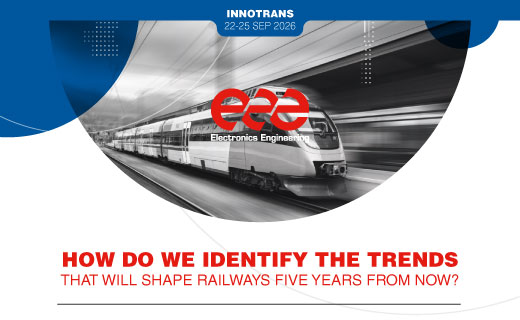
Predicting what rail will look like five years from now is not about guessing which technology will be in fashion. Nor is there a single source capable of providing the answer.
For an engineering company, anticipating railway industry trends means observing many different signals at the same time.
Railway Industry Trends Don’t Appear Overnight
When a new technology reaches the market, it has usually been years in development. Before becoming an established solution, it goes through different stages: research, testing, initial projects, validation and, eventually, larger-scale implementation.
That’s why identifying a trend early requires looking at what is not yet mainstream. It could be a technology beginning to appear in new projects, a need that is recurring among different operators, or a problem that several manufacturers are trying to solve in similar ways.
Technology Is Only Part of the Equation
Talking about railway trends often leads directly to concepts such as artificial intelligence, automation, digitalisation or connectivity. But a technology does not automatically become a relevant trend simply because it is technically interesting. It also has to solve a real problem.
For example, sensors can provide huge amounts of information, but their value depends on whether that data can be used to improve maintenance, detect anomalies or make better decisions.
The same applies to artificial intelligence. Its development may open up new possibilities for data analysis or system monitoring, but its integration into the railway sector must take into account factors such as safety, validation, traceability and applicable regulations.
The important question is not only what can a technology do?, but what can it actually be used for on a train?
Listening to Those Designing the Future of Railway Industry Trends
A conversation with a manufacturer can reveal which problems their engineering teams are trying to solve. That is why maintaining continuous contact with manufacturers, operators, integrators and other industry professionals is an important part of technology monitoring.
Every conversation provides a different piece of the puzzle. And when those pieces begin to form a pattern, it becomes easier to understand where the market is heading.
Regulation Can Also Anticipate Change
Another signal that can easily go unnoticed is regulatory development.
New requirements relating to safety, interoperability, cybersecurity or sustainability do not appear overnight. Their development can provide an indication of where the industry will need to evolve.
What Role Does InnoTrans Play?
And, of course, major international railway industry events are another important part of this process.
For example, InnoTrans brings together manufacturers, operators, technology companies, engineering firms and professionals from virtually every area related to rail mobility in Berlin.
Being there allows us to observe which topics are attracting the industry’s attention, which technologies are appearing repeatedly, which solutions are beginning to be implemented and, above all, to hear directly from the people working on the projects that will shape rail in the years ahead.
For Triple E, taking part in these events is part of our ongoing observation of the industry. You don’t always need to be presenting something new to get value from an event. It is also important to listen, ask questions, compare perspectives and come back with a broader view of what is happening across the industry.
In railway engineering, anticipating change means staying close enough to the industry to detect it while it is happening. Technology, regulations, customer needs, project experience and direct industry engagement all form part of that perspective.