
electronics for hostile environments

Electronics for Hostile Environments: How Reliable Systems Are Designed When Failure Is Not an Option

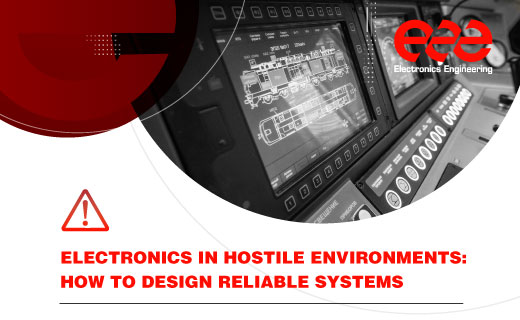
When it comes to critical systems, the environment matters. A lot. Designing an electronic system for a climate-controlled office is not the same as designing one for a train exposed to extreme heat, constant vibrations, humidity, dust, saline environments, and electromagnetic disturbances. In these scenarios, a functional failure is not just a simple malfunction: it…

functional safety

When Safety Cannot Depend on the Human Factor

n many critical sectors, safety has traditionally relied on vigilance, manual intervention, and human reaction. But there are environments where that simply isn’t enough. Unattended facilities, 24/7 operations, distributed systems, or high-risk scenarios make relying solely on humans for safety a risky bet. Not because people fail—though they sometimes do—but because there are situations where…

trends 2026 railway

Fire Protection in Rolling Stock: Trends for 2026

Fire protection in the railway sector enters 2026 in a phase of technical maturity defined by three main drivers: proactive prevention, early detection through advanced electronic systems, and coordinated response across infrastructure, rolling stock, and operations. The increase in extreme weather events, the higher technological density of modern trains, and the evolution of European regulatory…

EFFICIENT TRANSPORT

How electronics drive more efficient transport

The mobility of the future doesn’t depend solely on cleaner engines or modern infrastructure. Behind every real advancement, there’s something quieter yet equally decisive: the electronics that make a train consume less energy, last longer, and leave a much smaller environmental footprint. Today, railway sustainability cannot be understood without precisely applied electronic technology. How Electronics…

Electronics in Extreme Environments

Electronics in Extreme Environments: From Trains to Maritime and Energy

Below-zero temperatures. Scorching heat. Constant humidity. Vibrations that would make any circuit tremble…And yet, electronics keep working.How do they do it? Welcome to the fascinating world of electronics in extreme environments, where every component becomes a small technological hero. And where the engineering that was born in railways now travels across the seas and ventures…

big data in rails

The Railway Also Runs on Data

For over 200 years, railways have moved thanks to tracks, locomotives, and increasingly sophisticated signaling systems. Today, however, there is a new “fuel” driving railway innovation: data. The digitalization of the sector is transforming the way we plan, operate, and maintain infrastructure and trains. It’s not just about collecting information, but about turning it into…

extreme summer trains

Extreme Summer, Ready Trains: How Railways Withstand Heatwaves 

When temperatures rise above 40 °C, keeping transportation systems running —safely, reliably, and comfortably— becomes a real challenge. But modern trains are up to the task.  Thanks to a combination of electronic engineering, smart design, and preventive maintenance, railways can continue operating even under extreme thermal conditions. How do they do it?  Adaptive Ventilation and Climate…